
Case Study: Aerospace Fuel Nozzle Components Metal 3D Printing IN718 and 316L stainless steel
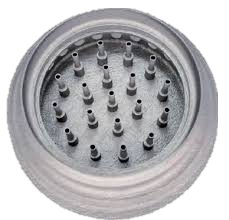
The application of additive manufacturing technology to fuel nozzles will greatly promote the development of nozzle research. The advantages of its application in nozzle development are shown in the following aspects. Reduce the number of processing and assembly procedures. As additive manufacturing technology is a one-time processing technology, we only need to provide the 3D model of nozzle that meets the design requirements. A variety of complex structure design have been realized. For multi-stage swirling structure which is difficult to be completed by traditional processing methods, additive manufacturing technology can be achieved through 3D model.
The Problem:
The aerospace industry demands components that deliver higher efficiency, reduced weight and superior durability, all while maintaining strict safety and performance standards. Traditional manufacturing methods often limit design possibilities and require complex, multi-step production cycles. This case study highlights how OTS enabled lightweight metal additive manufacturing for two key systems: fuel nozzles and fuel supply assemblies. This was carried out using high-performance alloys and precision additive processes. Aerospace fuel systems incorporate parts with internal channels, micro-scale features and multidirectional geometries that are difficult or impossible to produce with conventional machining. These limitations lead to various issues. OTS needed to deliver a solution that improved efficiency, reduced weight and accelerated production without compromising mechanical integrity.

Our Solution:
OTS utilized advanced metal 3D printing technologies with IN718 and 316L stainless steel to manufacture high-precision fuel system components directly from digital designs. This enabled:
- Lightweight, Optimized structures
- 25% reduction in weight
- Single-piece manufacturing which replaced an 18-part assembly
- Enhanced structural integrity in thin walled sections.
- 7% improvement in combustion efficiency due to optimized fuel flow.
When using the process loop of intelligent design, additive manufacturing, the development iterations of a product can be dramatically reduced. This case study will help us to develop further amazing 3D-Products for you. Feel free to contact us for more information!